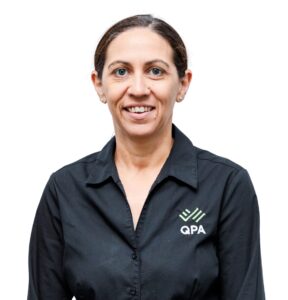
For many practices, accreditation can feel daunting at the start. For Sam Piper, part of the job is helping them realise they are often doing more right than they think.
As one of QPA’s Quality Accreditation Managers, Sam works closely with practices throughout the accreditation cycle – answering questions, reviewing self-assessments, helping teams understand requirements and supporting them all the way through to certification.
It is work built on consistency, practical guidance and long-term relationships. After 13 years with QPA, many of the practices in Sam’s caseload are familiar names, returning for another round of accreditation with someone they already know and trust.
“You don’t always meet people in person, but you build those relationships over time,” she says. “There’s that familiarity because you’ve supported them through it before.”
Tell us about your role at QPA.
I’m a Quality Accreditation Manager, so I’m the support person for practices going through accreditation.
I guide them from start to finish, helping them understand what they need to do and supporting them if anything needs attention.
At the moment I manage about 130 practices, and they are all very different. Some are in their first accreditation round, while others have been accredited many times before.
What does a typical week look like?
It can vary a lot.
Some days it is phone calls and emails, answering questions as they come up. Other days it might be reviewing self-assessments or talking through particular requirements with a practice.
Because practices are at different stages, you are often working across a lot of different conversations at once.
What do you enjoy most about the role?
Definitely the relationships.
Even though you do not necessarily meet people face-to- face, you get to know them over time because you often work with the same practices across accreditation cycles.
There is something nice about seeing a familiar practice come back around and knowing you have already worked together before.
What is most rewarding at the end of the process?
Telling a practice they are certified.
A lot of practice managers are carrying a lot of pressure through accreditation, so being able to give that good news at the end and recognise the work they have put in is really rewarding.
What does good quality look like in a practice day-to-day?
At the end of the day, it comes back to patient outcomes. It is about making sure patients are receiving good quality care and good service.
Sometimes practices are very aware of the systems they have built. Other times they do not realise that what they are already doing every day is quality improvement.
So practices sometimes underestimate what they are already doing well?
Yes, often.
A lot of the time, once you start talking with them, they realise they have already made improvements.
They might say, “We changed this,” or “We introduced that,” and not necessarily think of it as quality improvement, but every little bit counts.
Even things like regular meetings, recording meeting minutes and following up on actions are often stronger than they realise.
What advice do you find yourself giving most often?
That accreditation is a team effort.
It should never sit with one person alone.
And if there is a non-conformity during the survey process, not to be too hard on yourself. It is not failure – it’s an opportunity to improve.
That mindset helps practices get much more value out of accreditation.
What keeps you motivated after 13 years?
The practices themselves.
I enjoy working with practices that are engaged and want to improve. Supporting them through the process and seeing them achieve accreditation still matters.
And I also really value the team here at QPA.
What do you enjoy outside work?
Gardening is probably my main thing.
I also spend a lot of time with family – I have two adult children and three grandchildren – so that keeps me busy too.
Anything people might not know about you?
Lately I have become very interested in true crime podcasts!